Product finder

Electric tugs

Battery-powered, pedestrian-operated tugs for wheeled and railed loads. Tell us what your load runs on and its heaviest weight, and we'll show you the machine rated for it.

Matching machines
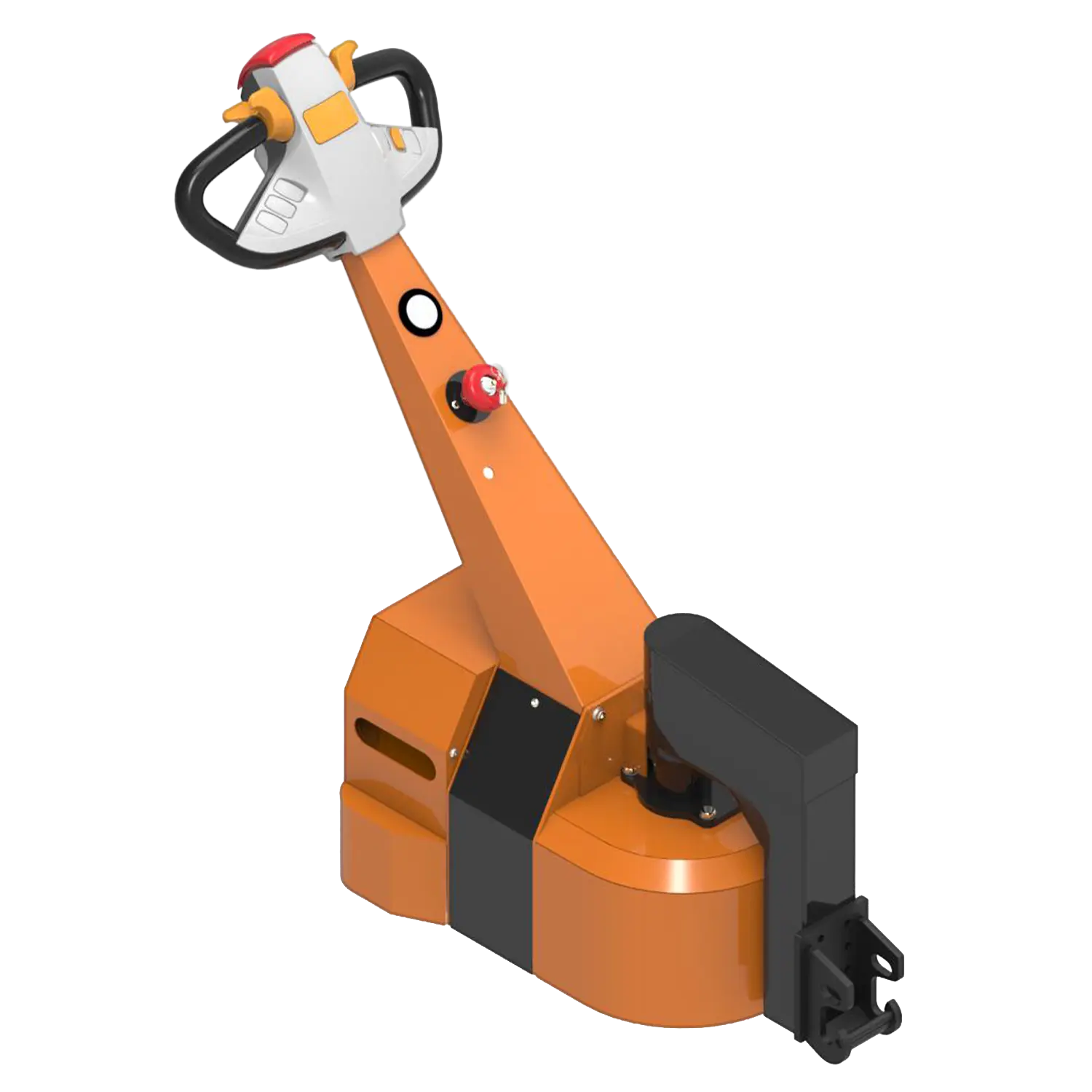
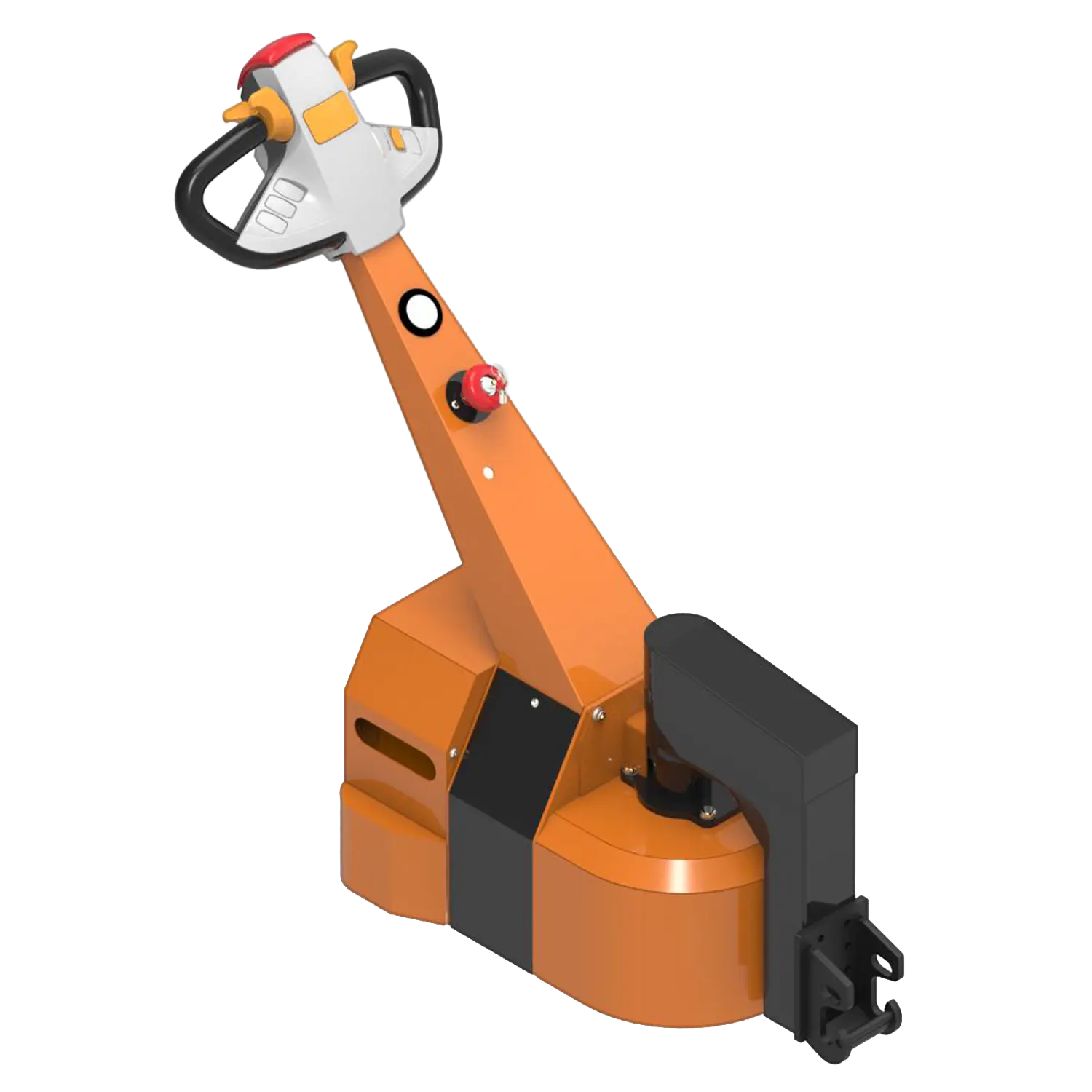
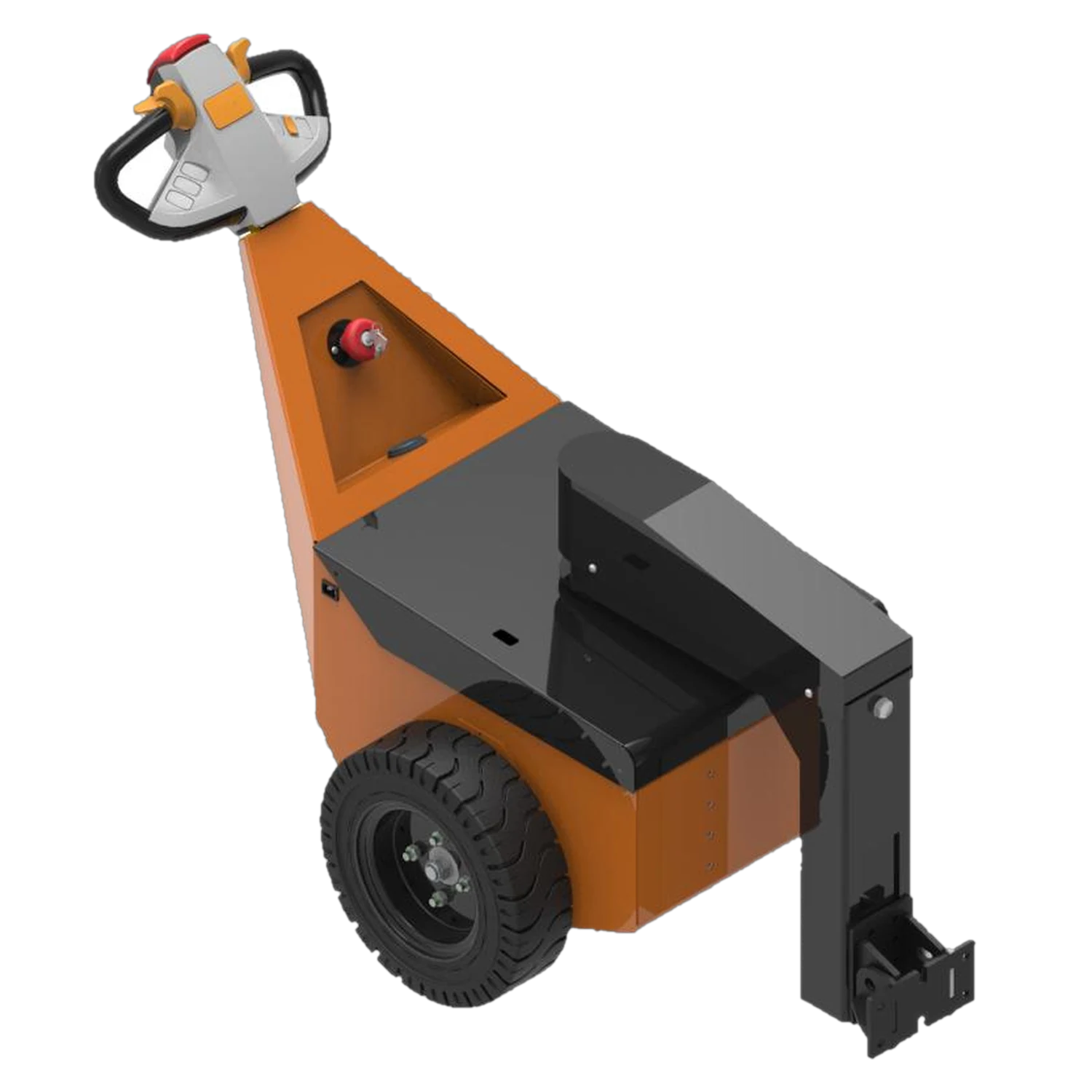
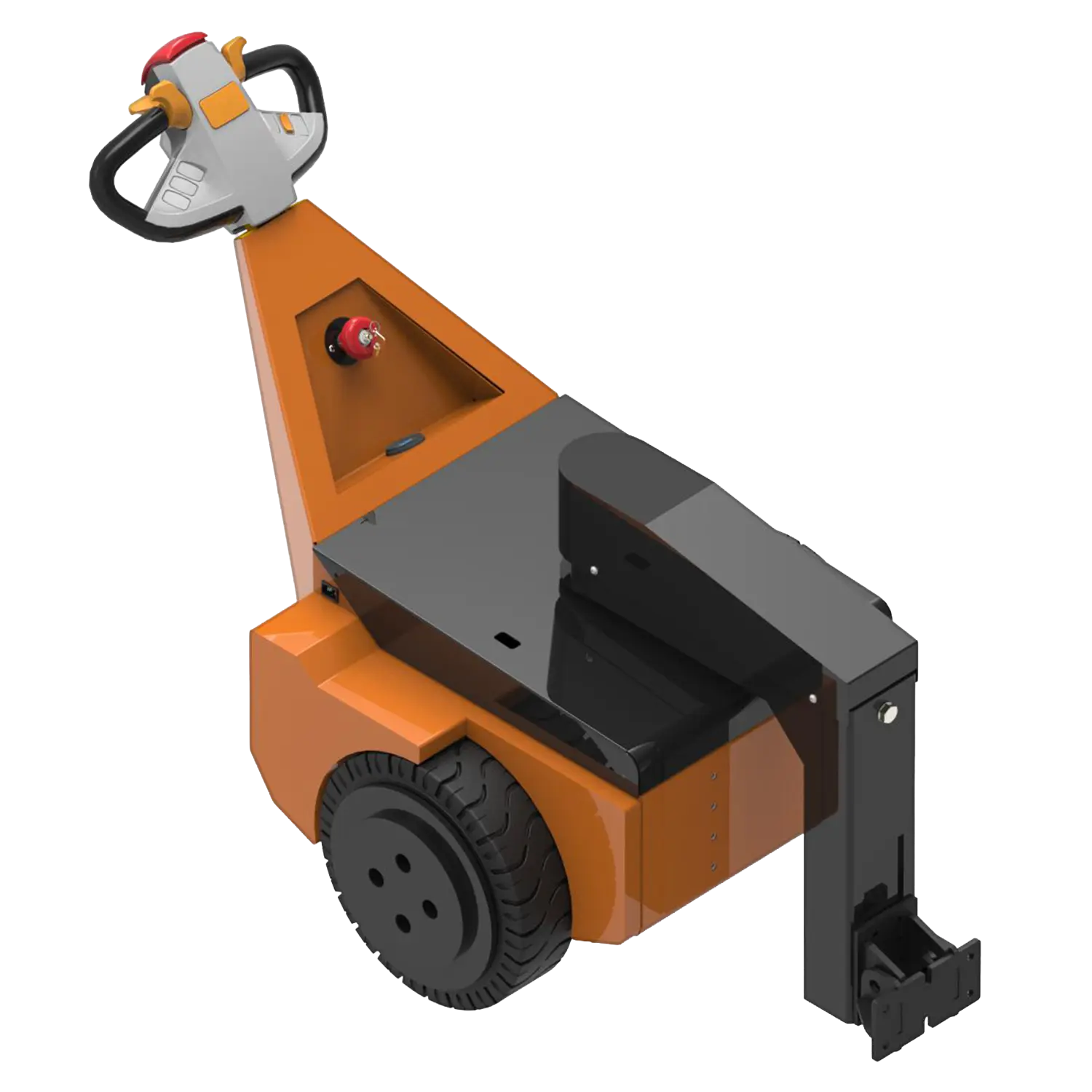
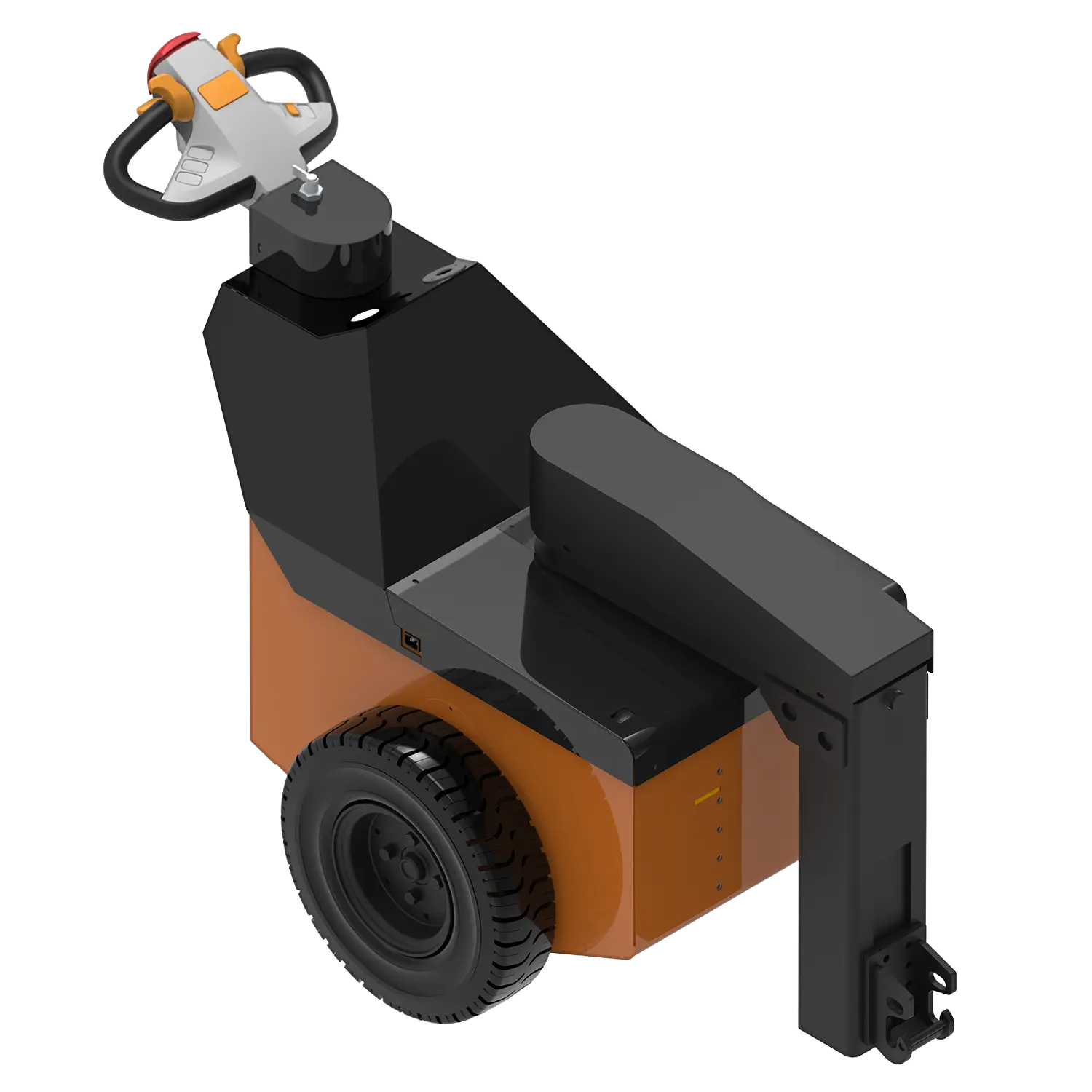
  • TT50 compact electric tug with orange body and black tiller
    Tractive Tugs

    TT50 Tractive Tug

    For single roll cages, hospital and catering trolleys. Our lightest tug, with a 1.4 m turning circle for tight corridors.

    On castors
    1,000 kg
    On rails
    3,000 kg
  • TT100 electric tow tug with orange body and black tiller
    Tractive Tugs

    TT100 Tractive Tug

    For trains of roll cages, linen and catering trolleys. Twice the TT50's drawbar pull in the same compact frame.

    On castors
    2,000 kg
    On rails
    6,000 kg
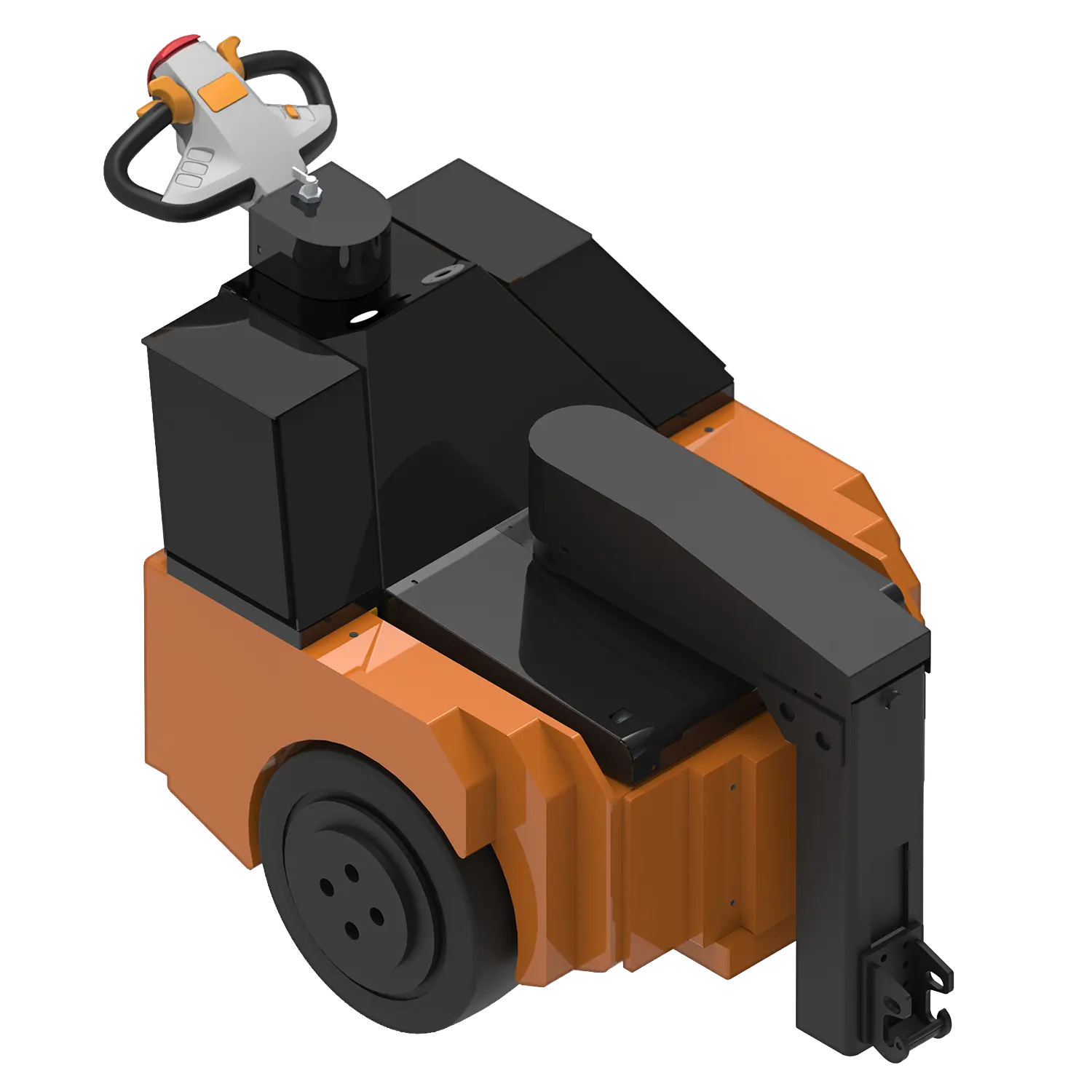
  • TP250 electric tug with orange body, black tiller and quick latch coupling
    Tractive Units

    TP250 Tractive Pusher

    For cars and vans, die trolleys and production trolleys. Comes in standard and compact versions for tight cells.

    On castors
    4,000 kg
    On rails
    20,000 kg
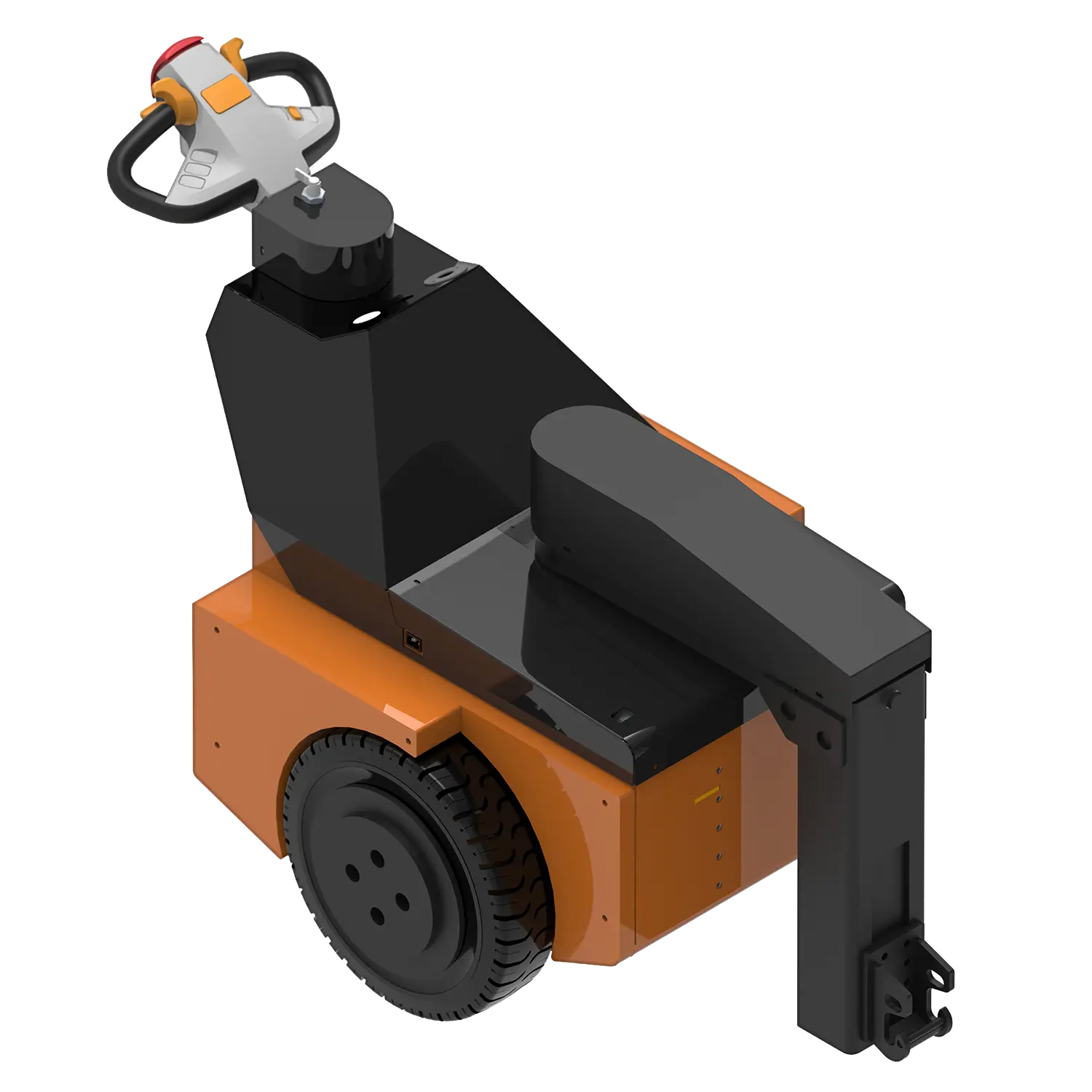
  • TP500 electric tug with orange body, black tiller and quick latch coupling
    Tractive Units

    TP500 Tractive Pusher

    For heavy trolleys, kiln cars, reels and jigs. In standard and compact versions, with remote control as an option.

    On castors
    8,000 kg
    On rails
    40,000 kg
  • TP1000 heavy duty electric tug in orange and black with a tiller handle
    Extra Heavy

    TP1000 Tractive Pusher

    For heavy plant, cable drums and big railed loads. The first of the Extra Heavy range, with power steering.

    On castors
    12,000 kg
    On rails
    100,000 kg
  • TP2000 heavy duty electric tug in orange and black with a tiller handle
    Extra Heavy

    TP2000 Tractive Pusher

    For rail bogies, transfer trolleys and heavy production frames. Power steered, with 12,000 N of drawbar pull.

    On castors
    15,000 kg
    On rails
    200,000 kg
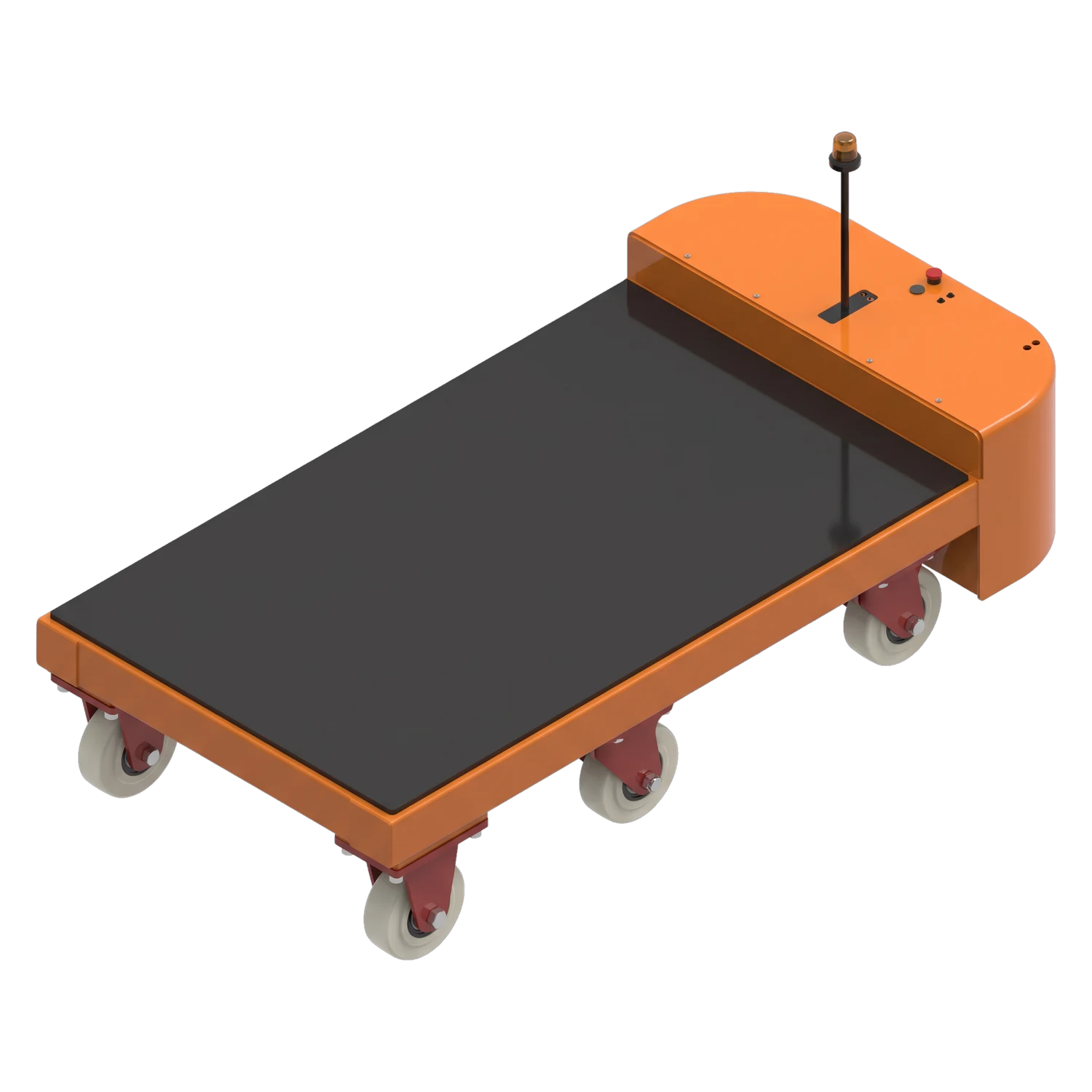
  • TBC30 electric burden carrier: a low flat-deck platform with an orange chassis, black deck, six castors and an orange control housing with amber beacon
    Burden Carrier

    TBC30 Burden Carrier

    For moving heavy tooling, moulds and parts around the site. Power steered, with a 48 V drive.

    On castors
    30,000 kg
  • TP3000 heavy duty electric tug in orange and black with a tiller handle
    Extra Heavy

    TP3000 Tractive Pusher

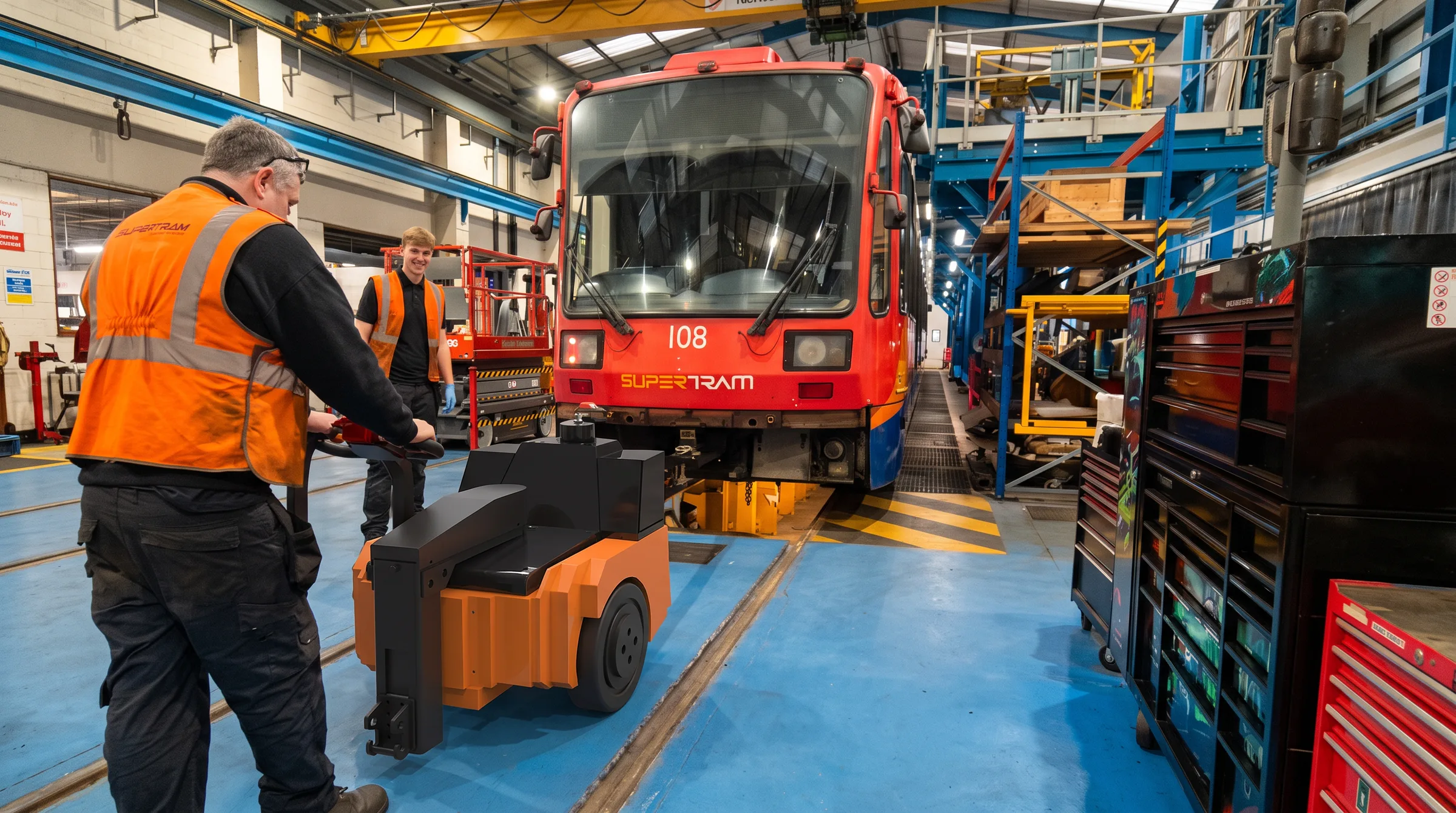
    For trams, rolling stock and the heaviest assemblies. Our most powerful tug, with power steering and 15,000 N of pull.

    On castors
    30,000 kg
    On rails
    300,000 kg
Electric tugs and battery powered tugs

One person on foot, moving what used to need a forklift.

An electric tug is a battery-powered, pedestrian-operated machine that pushes or pulls a wheeled load. The operator walks with it, steering from a handset, and the tug supplies the force that would otherwise come from several people or a forklift. Because nothing is lifted, there is no load overhead, no counterweight and no licence to drive one.

Tractive Power has designed and built electric tugs in the UK since 2008, at its works in Cheddleton. The range runs from the TT50, a compact tug for roll cages and hospital trolleys, to the TP3000, which positions trams and rolling stock on rails. Every machine is sized for two kinds of load, castor-mounted and rail-mounted, and every one is supplied with the coupling that fits what you are moving.

The finder above narrows the range to the machines that can move your heaviest load. The rest of this page explains how to read the figures and what to check before you choose.
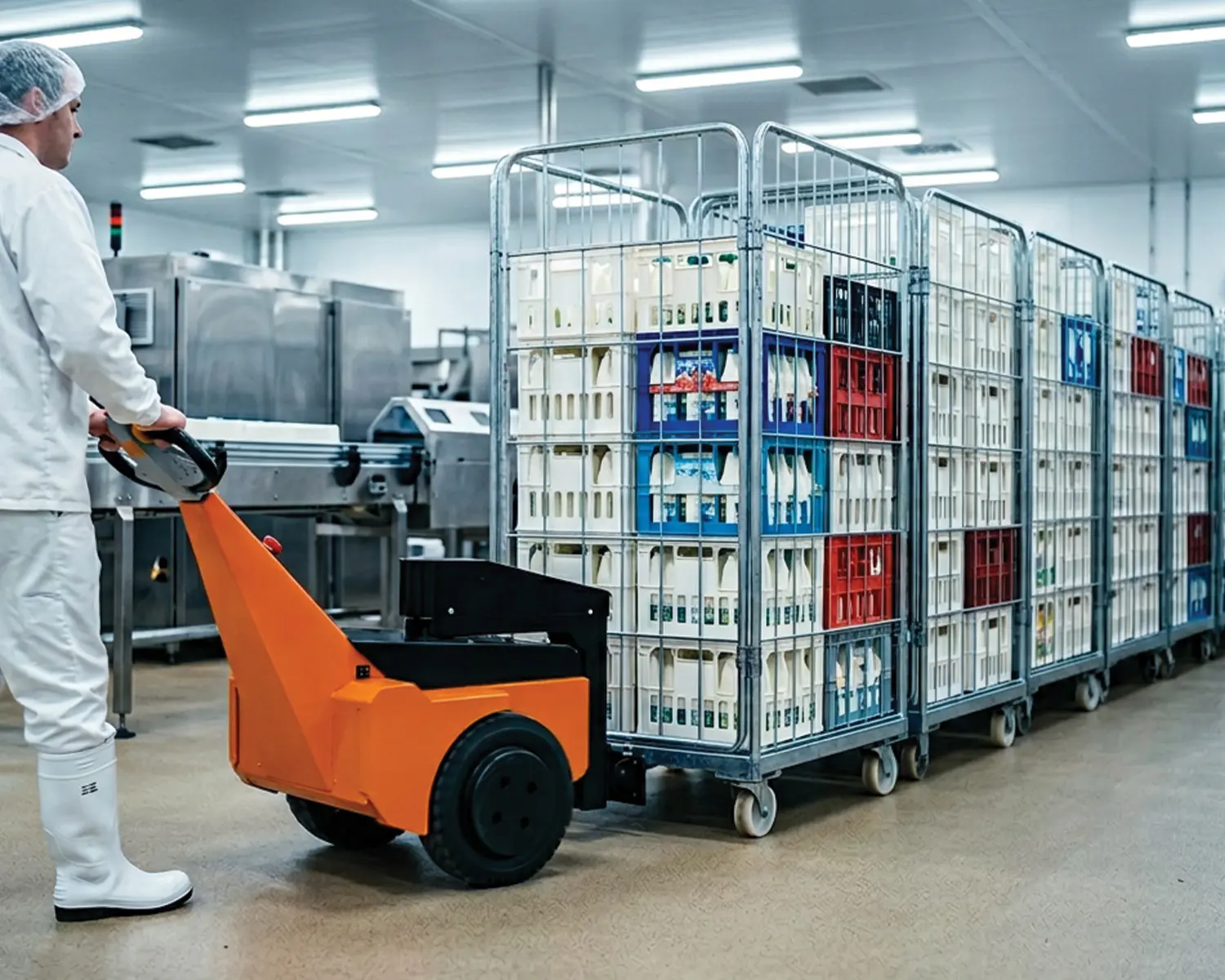
Operator in food-safe whites using a TP500 electric tug to push a line of loaded roll cages in a dairy
  • Battery powered, charged from a standard socket in about 8 hours
  • Walked by one operator, no licence required
  • Rated separately for loads on castors and on rails
  • Matched to your load with a standard or bespoke coupling
  • Designed and built in the UK, two-year warranty
Castors or rails

Why every tug has two capacity figures.
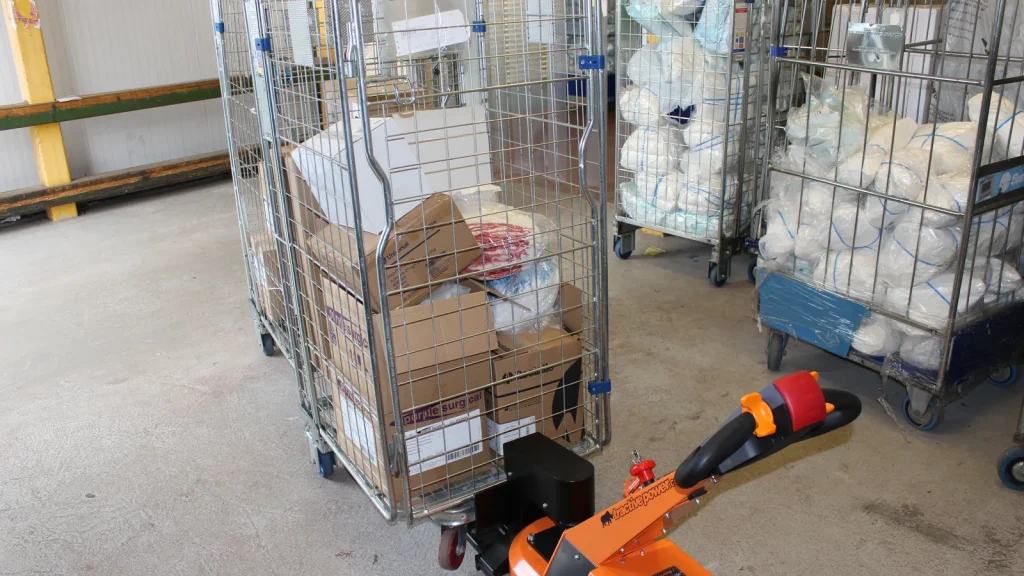
TT50 electric tug coupled to a loaded roll cage in a hospital goods area

Loads on castors or wheels

Trolleys, roll cages, cars, stillages and anything on castors. Rolling resistance is high because small wheels deform the floor and themselves, and it rises again on rough concrete, ramps and thresholds, so a tug moves far less weight on castors than on rails. This is the figure to use for almost every factory, warehouse and hospital job. TP250: 4,000 kg on castors.

TP250 electric tug pushing a loaded kiln car on rails towards a tunnel kiln

Loads on rails

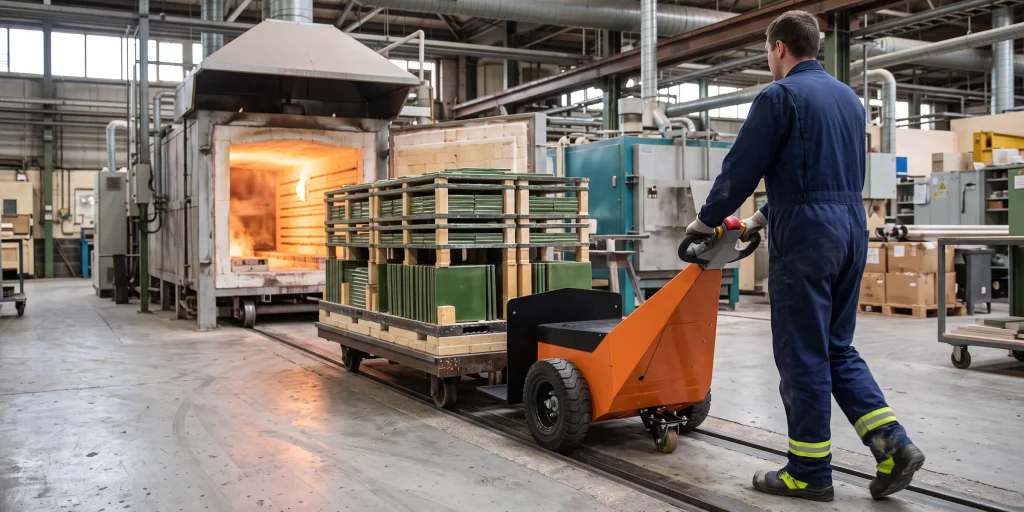
Bogies, kiln cars, transfer trolleys and rolling stock. Steel wheels on steel rails roll with very little resistance, so the same tug moves many times the weight it handles on castors. The rail figure applies to flat, well-maintained track; tell us about any gradient on the route. The same TP250: 20,000 kg on rails.

Both figures are on every product page because customers often need both. A ceramics works moves kiln cars on rails and ware trolleys on castors with one machine.

How to choose

Four things that decide which tug you need.

1

The heaviest load

Not the typical load, the heaviest. Weigh it loaded, or ask us to help estimate it. Choose a tug with headroom above that figure; a machine working at its limit all day wears faster and gives the operator less control on ramps.

2

What it runs on

Castors, pneumatic tyres, steel wheels or rails, and the floor underneath them: smooth resin, rough concrete, block paving or tarmac. Poor castors are the most common reason a load is harder to move than its weight suggests, and we will say so if that is the problem.

3

The route

Gradients, thresholds, lift sizes, doorway widths and the tightest turn. The TT range is 395 mm wide and fits in a hospital lift; the TP3000 needs room to work. A short slope can halve what a tug will move, so measure it.

4

The connection

How the tug attaches to the load matters as much as the power. Five standard couplings cover roll cages, trolleys, vehicles, drums and railed loads; where none fits, we design one. See the couplings

The range

Eight machines from 1,000 kg to 300,000 kg.

Four families, sized by what they move. Maximum rated loads on a flat floor are in the table, from the current specification for each machine; each product page has the full specification and a downloadable sheet.

2

Tractive Tugs

TT50 and TT100: 395 mm wide, for roll cages, trolleys and trolley trains in corridors and lifts.

2

Tractive Units

TP250 and TP500: the loads most factories move every day, with a Compact version of each.

3

Extra Heavy

TP1000 to TP3000: power steered, for plant, bogies, trams and rolling stock.

1

Burden carrier

TBC30: for loads that need carrying on a deck rather than towing.

Machine On castors On rails Drawbar pull
TT50 1,000 kg 3,000 kg 500 N
TT100 2,000 kg 6,000 kg 1,000 N
TP250 4,000 kg 20,000 kg 2,500 N
TP500 8,000 kg 40,000 kg 5,000 N
TP1000 12,000 kg 100,000 kg 8,000 N
TP2000 15,000 kg 200,000 kg 12,000 N
TP3000 30,000 kg 300,000 kg 15,000 N
TBC30 30,000 kg carried on the deck 15,000 N

Compare by weight   Brochure and spec sheets

Maintenance operative walking behind an orange TP3000 electric pusher moving a Supertram tram over a wheel lathe
Where they work

Any site where a load rolls and people walk.

Our tugs are used in hospitals and NHS laundries, supermarket distribution centres, dairies and food factories, pharmaceutical cleanrooms, car plants, aerospace hangars, ceramics works, paper mills, cable depots, tram and rail depots, boatyards and modular building factories.

The common thread is a wheeled or railed load that was being pushed by hand or moved by a forklift in a space full of people.

Electric tugs by industry   Case studies

Manual handling

Pushing and pulling counts.

The Manual Handling Operations Regulations cover pushing and pulling as well as lifting, and HSE guidance sets out the forces at which a pushed load becomes a risk. A loaded roll cage or a trolley train on a worn floor exceeds them easily. An electric tug takes the force off the operator entirely, which is why most of our enquiries start with a manual handling assessment or an injury.

Questions

Electric tugs: the questions we are asked most

Mostly the name. “Tugger” is the American term and “pedestrian tug” or “power pusher” are used in the UK for the same kind of machine. Our smaller machines are called Tractive Tugs because they usually pull cages and trolleys; the larger ones are Tractive Pushers because heavy loads are more often pushed. All of them can push and pull.

No licence is needed. Operator training is available from Tractive Power, and most operators are confident within an hour. The controls are a steering handle with a throttle, a horn and an emergency stop.

Between 1,000 kg and 30,000 kg on castors, and up to 300,000 kg on rails, depending on the machine. The product pages and the table above give the rated figure for each. If your load is on poor castors, on a slope or on a rough floor, tell us and we will size the tug for the real conditions rather than the headline figure.

A full charge covers a normal shift for most applications, and the tug charges in about 8 hours from its onboard charger, plugged into a standard socket. A lithium-ion battery is available as an upgrade where a tug works around the clock.

Yes, on hard surfaces. Tarmac, concrete and block paving are fine; soft ground is not. Slopes reduce capacity, so give us the gradient and we will confirm the right machine.

The TT50 and TT100 are 395 mm wide and are used in hospital corridors and lifts every day. The Tractive Units and Extra Heavy machines are wider; dimensions are on each product page.

A coupling chosen for your load: roll cage, trolley, towing eye, fifth-wheel, paper roll or drum, or a bespoke design. Couplings can be changed if your loads change.

Standard delivery is 5 to 6 weeks from order confirmation. Machines can be bought outright, hired or paid for over time; the options are on each product page.

In the UK. Every machine is designed, built and serviced at our works in Cheddleton, with a two-year warranty and a UK service team. Distributors cover Europe, Australia and further afield.